Good Reason

It's okay to be wrong. It's not okay to stay wrong.

Page 101 of 126

Radio ad

Gary: Hi. I’m Gary Tobin.

Aryeh: And I’m Aryeh Weinberg. We’re the authors of a new report about political opinion at universities. For the last several years, we’ve been examining the views of university educators. Why? In a word: influence.

Gary: Everyone knows that young people of today idolise middle-aged academics. We would hate for their impressionable minds to be damaged by being exposed to the wrong kinds of opinions, if you know what we mean. And in our research, we found some startling facts.

Aryeh: Did you know that only 17% of faculty identify as conservative, but 46% identify as liberal? And in the 2004 election, 72% of academics voted for the Democrat John Kerry, but only 25% voted for Bush. It’s like some kind of plot!

Gary: Telling figures indeed. And these are just a few of the facts that show us that university educators aren’t representative of the general public. And for some reason we think they should be, just like every other occupation.

Aryeh: Now you could argue that academics are highly educated, and highly educated people tend to be more liberal than the general population. But we look beyond such simplistic explanations. We think ‘liberal groupthink’ is to blame. You see, when liberalism is entrenched in universities, it has a chilling effect on conservatives’ ability to speak their minds for fear of reprisal. As you have probably noticed from talk radio, Fox News, or family members, right-wingers are sometimes afraid to voice their opinions because… they’re shy.

Gary: Painfully shy. But we’re not advocating quotas or purges. We recommend that universities maintain a balance of liberal and conservative views, of left-wing and right-wing, of informed opinion and ignorance, just as we see in society at large. And we can learn a lot about achieving a healthy balance of views from business and management schools, which somehow manage to have a higher proportion of conservatives than elsewhere in universities. Viva la marketplace of ideas!

Aryeh: We also think that hiring and promotion processes should be free of political ideology.

Gary: Unless that means that too many liberals are getting hired or promoted.

Aryeh: Please download Volume One of our series, ‘Political Beliefs and Behavior’. And while you’re at it, check out our book ‘The UnCivil University‘ in which we make the stunning discovery that liberal academics are anti-Semitic because they’re not pro-Israel enough.

Gary: Won’t you help us to make academia safe for conservatism? Thank you.

It started like any other morning in church.

There was an opening hymn, which everyone sang, including the new convert, Sister Z, just in front of me. But it soon became apparent that she wasn’t singing the same hymn as everyone else. She was singing some kind of high-pitched melody that only she could hear. Rather loudly, too. And she didn’t stop singing at the end of the verse, she just kept on singing with her head pointed to the ceiling. Something was wrong.

“Dad, what’s she doing?” asked Youngest Boy.

“She’s having a problem in her mind,” I said, wondering what to do. “Just stay calm.”

The hymn ended, but her strange singing continued. The congregation stayed awkwardly silent. Then she started hitting herself in the chest. The person next to her tried to talk her down, but it wasn’t working. Sister Z got up and began shouting at the silent congregation.

“This is an adulterous church!” she shouted in the aisle. “You can’t tell me to be quiet! I will burn your skin.” And so on for about a minute.

It was then that she approached the stand and tried to go for the mike, but the bishop refused to yield. Instead he said, “Brothers and sisters, could I just ask you to quietly leave the chapel and go into the cultural hall.” Which everyone did.

An emergency team soon arrived. They’d seen Sister Z before; apparently this wasn’t a new thing for her.

People were confused and concerned. Fortunately we had some mental health professionals in the ward. Brother B had a brief chat to the adults, and Sister C spoke to the Primary children. All in all, the incident was handled very well.

For me, the notable thing about the incident was the practical way in which everyone handled it. Mormons do believe in the devil, and anecdotes about satanic possession do exist, but they’re not common. I think loads of Latter-day Saints would argue that devils could be cast out using the Priesthood. But how did the people of the Church handle the affair? They called in people who were trained and had experience in that area, like any sensible person would.

If this had happened in a born-again church, it would have been handled totally differently. Demonic possession? No problem! Some of the brethren grab her, the bishop commands Satan to leave, she barfs, end of story. Great meeting! Until next time she has a psychotic episode because the problem hasn’t been solved.

No, they handled it the right way — the non-spiritual, material way. Sensible people know that when you need something done, you don’t rely on spirits. You do what works. You don’t pray to get your sink fixed. You call a plumber. Of course, you could try and sneak God in somewhere, perhaps by praying that the plumber will know what he or she’s doing. The idea has worked its way into proverb: “God helps those who help themselves.” Or this modern homily: “Pray as if everything depended on the Lord, and then work as if everything depended on you.” Or as Voltaire put it: “It is unquestionable that certain words and ceremonies will effectually destroy a flock of sheep, if administered with a sufficient portion of arsenic.”

That which we call ‘spiritual’ is actually just made up. Therefore it’s only good in situations where
a) you can’t do anything about the problem (it makes you feel better)
b) you’re already doing something practical about the problem (and then when it works, you credit God instead)
c) it’s not a very serious problem that you don’t need solved, or
d) the problem relates only to ‘spiritual things’ and not the physical world in any way.

And these are in fact the situations in which people seek spiritual guidance. But when they need to do something real, even believers know that it’s the non-spiritual methods that work.

Powers of Ten

I saw this film when I was a kid (and probably so did you). It’s called “Powers of Ten“. It starts with a picnic scene, and zooms out by an order of magnitude every ten seconds. You see the galaxy and a good swath of the universe. Then it’s time to zoom in and see the atoms and quarks that make up cells and skin and picnickers.

When I heard an estimate that the universe contains 10^100 atoms, I thought, “Gee, only ten to the hundredth?” Now I can see how that’s actually quite a lot.

Friday Random Five does what it has to.

I actually bought a song yesterday. It was ‘Shadows’ by the Midnight Juggernauts, available (in non-DRM mp3 format!) from Inertia Records. Hard to say who’s flogging it harder, me or Triple J. It’s an aggressive slice of dance funk electronica. Anyone’s life would be augmented by hearing it.

On to the Friday tunes.

Sicilienne by Gabriel Fauré Album: Classic Moods
Classical ‘best of’ CDs are something of an embarrassment to their owners. You weren’t sufficiently connaissant to hunt down the definitive Fauré Requiem; you had to go out and find some collection at WalMart for a buck ninety five, and listen to it while you’re doing the washing up. This collection’s even worse; not only is it too plebian to list the artists, it actually lists the movies that have used the tracks! Right after the name of the song! Oh, the shame. They’re going to revoke my WASO season pass for sure.

The Sicilienne is Fauré at his usual melodic self. Light and dancing; lovely.

The Lure of Silence by Tim Story Album: Soul of the Machine
This Windham Hill compilation has come up before. It’s one of the few I still listen to. This piece is contemplative. It repeats an A to C interval like a metronome. The effect is that of the quiet passing of time.

War on War by Wilco Album: Yankee Hotel Foxtrot
Isn’t this a tremendous album. Hard to believe that the label didn’t know what to do with it when they got it; they thought it was too noisy. Hadn’t anyone heard of adding weird little electronica touches? Fortunately the band raised the money to buy it back and release it on their own Nonesuch label. For all the fuss, the track is smooth and grooving, not bellicose as the title would suggest.

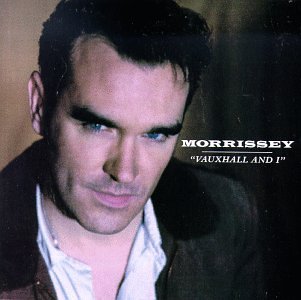
Used to Be a Sweet Boy by Morrissey Album: Vauxhall and I
One supposes the boy to be Morrissey himself, reminiscing about his childhood, before all the bad happened:

Used to be a sweet boy
Holding so tightly to Daddy’s hand
But that was all in some distant land.

Moz has a real gift for writing about his childhood in a way that makes you feel that he’s writing about yours. I’m thinking of Late Night Maudlin Street, but I could have picked a later one like There is a Light that Never Goes Out. Maybe this what makes Morrissey so appealing to his legions of obsessive fans.

Cellistica by Klaus Schulze Album: Audentity
If you ever find a copy of this 2-disc work by electronic experimentalist Klaus Schulze, buy it. Take the first disc and throw it in the bin. Then superglue the second disc into your CD player.

I first heard this disc because my Spokane friend Brent Beever (of Cattleprod fame) gave me a four-track tape of his songs called “All My Best”. I listened to it for a couple of years without ever turning it over. When I accidentally inserted it upside-down in someone’s car tape deck, I was suprised to hear this on the b-side. What I heard was 25 minutes of cybernetic cityscape with cello followed by another 25 minutes of… well, I won’t describe it in case it comes up later. And I didn’t even know what it was or how to find it. No record store guys knew. It would have to wait 15 years until the collective experience of Internet users could tell me.

Alas, this is from disc one. The feel is the same, but the pace is too frenetic. The parts mash together into a textureless blur. But it gets easier as it goes. The music unwinds and you get lost in it. It’s not an exercise in patience like some Autechre; it’s atmospheric and engrossing.

Good and Bad Reasons for Believing

Has it really been almost a week without a blogpost? You know what that means: I’m out of the running for the Bloggy McBlog Award for Most Pathologically Prolific Self-Expression Despite Deadlines and Actual Work. Drat.

But this page inspired me. It’s an essay by Richard Dawkins to his 10-year-old daughter.

The way scientists use evidence to learn about the world is much cleverer and more complicated than I can say in a short letter. But now I want to move on from evidence, which is a good reason for believing something , and warn you against three bad reasons for believing anything. They are called “tradition,” “authority,” and “revelation.”

I like that he’s mentioned ‘revelation’ specifically. Let’s skip to that.

If you had asked the pope in 1950 how he knew that Mary’s body disappeared into Heaven, he would probably have said that it had been “revealed” to him. He shut himself in his room and prayed for guidance. He thought and thought, all by himself, and he became more and more sure inside himself. When religious people just have a feeling inside themselves that something must be true, even though there is no evidence that it is true, they call their feeling “revelation.”

That description is not a straw man. It is part and parcel of what Latter-day Saints expect to get out of the religious experience, and it is a key reason for believing people to hold the beliefs they do. It’s also the hardest to counter. People have a natural tendency to believe their own experiences, and it’s very difficult to disbelieve your experience when it runs counter to fact. This tendency kept me believing in counterfactual things for absolutely years.

The essay is everything I wanted to say to my kids about evidence (and some things I already have).

Carmina Burana

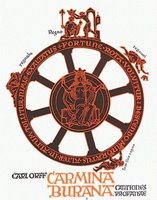
I have just finished singing in a performance of Carl Orff’s Carmina Burana with Collegium Symphonic Choir. Every time I do a piece of music, I always fall in love with it and think, “This is the best thing I’ve ever done!” But now I’m thinking, “Hey, I think this might actually be the best thing I’ve ever done!”

Carmina Burana (or ‘Songs of Beuern’) is an 11th century collection of poems written by defrocked monks and vagrants who had been kicked out of their monasteries and had to get money teaching and doing whatever they could. Along the way, they wrote these great poems about Spring and drinking and life and lots of sex. Fantastic.

A number of memories of the piece. The double piano of the ‘Tanz’, with each player alternating eighth notes. The slow and thoughtful ‘Veris leta facies’. And the famous ‘O Fortuna’, with which Carmina begins and ends. While singing this in the middle of a hundred people, the overwhelming image I got was that of a baby being born screaming into a world of fear and tumult, helplessly strapped to the torturous wheel of fortune. ‘In taberna quando sumus’ is a lusty drinking song, and an exceptionally fast bit of Latin as well. ‘Tempus est iocundum’ is typical of the joyful percussiveness of the piece. For Carmina is very noisy, and unclassically boisterous.

And so sexy. ‘Veni, veni, venias’ represents the fury of lovers. The feeling is: Come on, come on! I have got to have you now or I am going to die. ‘In trutina’, deservedly the second-most famous piece, in which the Girl decides to submit to the yoke of love. And ‘Dulcissime’ is the climax of the piece, if you will. A high soprano solo that goes right to the centre of you when it works. (And it did.)

It’s not a tough work to get, conceptually, but it is a very demanding sing that requires highly tuned attention and stamina from singers. The audience really seemed to enjoy it. Perhaps it’s so accessible because it’s so unrestrained. If you haven’t heard it all the way through before, it’s a very satisfying and recommended listen.

Coming soon to a re-education camp near you.

I really hope I never piss off James Wolcott. I’d hate to find myself eviscerated in a similar manner to Dinesh D’Souza.

D’Souza has written… something… entitled “The Enemy at Home: The Cultural Left and Its Responsibility for 9/11”. Yep. If you’re liberal, you’re responsible for 9/11. Nothing’s ever their fault, is it?

I doubt I could add anything to Wolcott’s post, but I’ll try. If I understand correctly, D’Souza’s point is that the Left is responsible for 9/11 because we’re too liberal and Muslims hate us for it.

“There is no way to restore the culture without winning the war on terror. Conversely, the only way to win the war on terror is to win the culture war. Thus we arrive at a sobering truth. In order to crush the Islamic radicals abroad, we must defeat the enemy at home.”

So we need to turn into the kind of people Muslims like so they won’t attack us? Hey, I’ve got an idea. Let’s institute sharia law. They’ll never attack us then!

Talk about an appeaser. Forget that. I like the idea of a liberal secular America, like the Framers intended.

Meet Frank Luntz.

You may not know Frank Luntz, but his work forms part of your mind.

You know how everyone gets so upset about ‘global warming’, but not so much about ‘climate change’? That phrase is Luntz’s handiwork.

Or have you ever had an immediate visceral reaction to the screaming meat of a ‘partial-birth abortion’? Luntz again.

His grubby fingerprints are all over the political discourse. Do you think he ever feels bad about using his linguistic gift for evil and not for good? Well, he’s hacked up a sort of non-apology in the pages of Time. Check out this lede:

In 1994, pollster Frank Luntz helped congressional Republicans sweep into power. Now he says the G.O.P. has become everything it once swore to destroy.

Having aided and abetted the most damaging administration of the last two centuries, it now seems a little late to be hairshirting. But better late than never. Let’s hear what he’s got to say.

What went wrong? Why do Democrats finally appear to be heading toward electoral success and Republicans back into the political wilderness? In a word, fatigue. Americans are tired of the war, tired of watching illegal aliens race across our unguarded borders, tired of high energy costs, tired of wasteful Washington spending, and tired of story after story of political corruption and misbehavior.

Ooo, this sounds good. I love a good redemption story. But wait! the guy’s a linguist, and therefore not one to underestimate. He may just be getting our trust so he can sneak in his poison. Warily we continue:

The leaders of the Republican Party in 1994 were bold, passionate visionaries with the courage to go to the people with a clearly defined agenda. Issues and principles drove them. Today, their agenda stretches no further than the next election. The same people who were elected on a platform of change have become the establishment bulls who fight change today. The 1994 Republicans advocated balanced budgets. Today, they defend deficits. The 1994 Republicans wanted to eliminate government programs. Today, they propose and create them. The 1994 Republicans held themselves and Congress to a higher ethical standard. Today, they seem more interested in protecting their jobs than protecting the people they serve. They came to change Washington. Washington won.

Um, wait a minute. Isn’t this some of that good old anti-Washington crap we’ve heard from the Republicans for years? Pity those good souls — they just wanted to make a difference in the world! And what did Washington do? It destroyed those noble-hearted boys! (Sniff) I’m sorry. I’ll continue.

It is therefore not surprising that in a recent national poll we conducted, 10% of the electorate that traditionally votes Republican, won’t. This time, these Republican leaners (disproportionately older women) will split their tickets. For while Republicans are frustrated with their party, they’re not happy with the Democratic alternative, either.It is therefore not surprising that in a recent national poll we conducted, 10% of the electorate that traditionally votes Republican, won’t. This time, these Republican leaners (disproportionately older women) will split their tickets. For while Republicans are frustrated with their party, they’re not happy with the Democratic alternative, either.

Interesting, but I’m waiting for the exact moment that he tries to stick in the knife.

And make no mistake — the Democrats are no better.

There it is! Thanks for playing — you spotted the real point of the article: ‘They’re all a bunch of no-gooders.’ Which is secretly what inattentive voters think anyway. Why not vote Republican — it doesn’t make any difference anyway.

They have launched a hundred criticisms but offer no meaningful solutions.

Fred: I’ve got an idea. Let’s start wars, destroy the government, enslave humankind, and take all the money for ourselves!

Ned: What are you, a psychopath? That’s a terrible idea.

Fred: All you do is criticise my ideas. You never come up with any of your own.

When you’re the minority party, and the other party locks you out of negotiations, there’s no point in coming up with ‘meaningful solutions’.

They rebuffed efforts to introduce a party platform because they felt they could gain more seats by attacking Republicans rather than explaining what they believe.

See above.

And on and on. This is not a confessional. It’s a fake retreat. Now you see his game.

Meet the real Frank Luntz. Linguist. Republican. Asshole.

Measure your stupid

How stupid are you? Depends on which of these truly loopy notions from recent opinion polls you agree with. If you go all the way to the bottom, please back away from the computer and call a professional helping person.

The rest of you may find this list fruitful when discussing notions of Rock Bottom on opinion polls. Some posit a relationship between Rock Bottom and Absolute Stupid, but Rock Bottom is believed to be issue-specific, whereas Absolute Stupid is assumed to be more or less constant.

  • People who approve of the job Bush is doing: 36%
  • People who think abortion should always be illegal: 24%
  • People who think that America is ready to elect an atheist as president: 14% (Not that this is a terrible idea. I’m for it, but is America ready? Crazy talk!)
  • People who think gas will cost ‘a lot less’ by the end of the year: %9
  • People who say the war in Iraq is going ‘very well’: 6%
  • People who say that the Foley scandal (where the Republican leadership tried to cover up a Republican pedophile senator) would make them more likely to vote Republican: 4%

Data from Polling Report.

Saturday Random Five gives it all away

Heart by Pet Shop Boys Album: Actually
We start from the heart. The Boys are great for coming up with those memorable choruses, and this is one. Also the lyric: ‘If I didn’t love you, I would look around for someone else.’ Oddly reassuring. Is this the one they wrote for Madonna, but they were too intimidated to ask her? I’m tempted to ask what is up with that, but then I guess I’d be intimidated too. And I can’t even write number one hits, like this was.

Where the Bee Sucks by Collegium Musicum Choir; Margaret Pride, conductor Album: Shakespeare, Candlelight, and Song
Sometimes I get these songs from shows I was in. Here’s one. I don’t actually sing on this one. It’s a lovely young singer named Shubhadra Young. She didn’t like the way she sounded; thought the last word of the title was the operative one, if I remember. But she’s very hard on herself; she’s a really good soprano, and we should see great things from her. It’s a beautiful piece as well.

Hold On by Orchestral Manoeuvres in the Dark Album: Crush
A walk on the beach with OMD. I used to like this song, but now it seems a bit insubstantial, even for OMD. Good album though, from that brief part of their trajectory between up-and-coming and not-very-interesting. I actually saw them live in ’85 for the promotion of Crush. They opened for the Thompson Twins; another New Wave act that I really enjoyed but that didn’t age very well.

C’est la Vie, C’est la Guerre by Stephen Duffy Album: Natalie (Single)
I can’t say enough good things about Stephen Duffy. He’s made some really beautiful music in all of his various incarnations. The song Natalie reminds you why you listen to music. This song’s a full-bodied acoustic strummer, with pipes. ‘We make the same mistakes, and share the same despair.’

Shakes by Tones on Tail Album: Everything!
Oh, look, it’s my least favourite Tones on Tail song. Stop me if you’ve heard this one before: they couldn’t think of a name for the band, and when they recorded their first album, the sound technician put the recording tones on the end of the tape, with a note: Tones on Tail. Et voila. ToT was a offshoot of the very talented Bauhaus team, though this song’s a bit too Bauhaus and not enough Tones. Perhaps they’ll come up again.

« Older posts Newer posts »

© 2026 Good Reason

Theme by Anders NorenUp ↑