Good Reason

It's okay to be wrong. It's not okay to stay wrong.

Page 122 of 126

Computers are like people. Very stupid people.

BMW had a spot of bother when they unveiled their spoken-language guidance system.

Unfortunately, a large number of drivers had a strong negative reaction to this technological marvel and demanded a product recall. The problem? The navigation system had a female voice. German drivers felt uncomfortable with, and untrusting of, a “female” giving directions! BMW acquiesced and switched to a “male” synthetic voice.

People react to computers as if they were people. I remember a study where people were asked to test a computer, and then evaluate the computer’s performance. One group was asked to click in the evaluation form on the same computer they tested, while another was asked to use a different computer for the evaluation. And people in the first group gave higher scores! Perhaps they didn’t want to insult the computer to its face.

There’s a principle here. We live in a world of speaking people. People respond to us when we talk to them. It’s natural. But our gift for interpretation sometimes makes us use it where it doesn’t apply — as with non-humans. You talk to the dog, and he looks at you so earnestly that it’s hard to believe he didn’t understand a word. You talk to empty space, and it’s hard to believe that the empty space isn’t giving you some kind of response. Easy to interpret any unusual circumstance as an answer. Especially when you’re exercising faith.

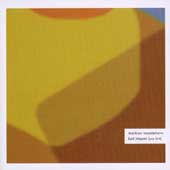
Bad Shapes

I first heard Machine Translations on Triple J when the song ‘Poor Circle’ was getting some (but not enough) airplay. It was broad acoustic guitar with a foot-stomping chorus and electronica touches. I was hooked.

I became better acquainted with this unique band through later albums Happy (highly recommended, especially ‘No Hip’) and Venus Traps Fly, and I got to meet multi-instrumental frontman J. Walker when MT were on tour for a couple of shows here in Perth, in support of their new EP Wolf on a String. A Machine Translations album is a grab bag of styles where beautiful acoustic strummings sit comfortably with electronic experimentation, classical instrumentation, strange percussion, and vocal manipulation. Through it all, the songwriting is solid, and the lyrics are playful and thoughtful.

I was very pleased, then, that J. has just mailed me a copy of his 2001 album, Bad Shapes. It’s interesting to listen to now, because it contains the seeds of directions that MT would take on later albums.

‘Poor Circle’ is the opener here, but soon you are soothed by the gentle strummings of “Rule Bound”. A representative lyric: “Would you believe me/If I said that I was lying?” ‘River of Darkness’ is similarly gorgeous — almost pastoral. The mood changes on ‘Hateful + Stray’, with its driving guitars and disorienting backwards lyrics.

On most MT albums, I find the experimental tracks the least interesting. There are a couple here: ‘Tinsel Town’ is a night in Casablanca by way of Leon Redbone. ‘Arabesque’ has the kinds of modes and rhythms you’d expect from the title, blended with electronica. The musicianship is first-rate, but it won’t be these tracks I return to. It’ll be ‘Sit in the Sun’, smooth and easy on the ears. Or ‘Winter Coat’, which finishes the album in bold and crunchy chords with sixths in just the right places and an unusual 7-beat structure.

Overall, a very worthy addition to the collection. A wide-ranging, well-crafted, and often beautiful album.

If you live digital, you can buy an etherware copy of this album here. Or you may want to start with ‘Happy’, which is more-widely available and also very good. If you’ve got to have the material object, try eBay, or contact me and I’ll see if I can scam you a copy from a local record store in my travels.

The machete of Reason

I happened upon this page about superstition on the official Watchtower web site.

Much of African culture is based on superstition. Movies, radio shows, and literature produced in Africa often highlight superstition and mystical subjects, such as magic, ancestor worship, and fetishes.

Have a look at the page and count the number of times they mention how superstitious Africa is. Is that racist? I’m not sure why they’re banging away at Africa when:

a) other places in the world may be just as superstitious — if religion is a kind of respectable superstition, then Europe and the USA are every bit as superstitious as anywhere in Africa and

b) the Watchtower folks are engaging in more than a few superstitions of their own, including belief in the Invisible Sky Father, life after death, and of course, de Debbil.

Oh, but they’ve got evidence.

Despite evidence to the contrary, some people today tend to deny the existence of Satan or evil spirits.

Wait — what was the evidence? Don’t leave me hanging! I’d really love to see some good evidence for the existence of Satan that couldn’t be explained by non-supernatural means. Exorcisms? Ouija boards? Reality TV? Rational thought? The fact that not everyone’s a Jehovah’s Witness? Be specific!

I have to say though, there’s a lot on the page to like.

Superstitions vary immensely throughout the world, and their propagation depends on local folklore, legends, and circumstances. But the common denominator is the belief that someone, or something, from the invisible spirit world needs to be appeased.

[Snipping some examples of this.]

Examples like these show that although some superstitions may seem quaint and inoffensive, others can be dangerous — even deadly. With a sinister interpretation, a harmless event can be transformed into a dangerous affair.

Yes, in reality, superstition is a belief, a form of religion.

Well, I couldn’t agree more with that part. It’s just funny when a religion tries to go all skeptical on another religion’s ass (if you will). By hacking away at belief, they undermine their own. They just don’t see it that way because they refuse to turn the machete of Reason onto themselves.

To clarify: I’m aware that the Jehovah’s Witnesses are actively anti-racist, for the which I give them props. I’m sure they’re targeting Africa because the writer perceived some strange superstitions there, which is true. But it’s really not any more bizarre than those of other belief systems. It’s a case where our own superstitions seem normal. My superstitious belief system is a religion, yours is a sect, theirs is a cult.

Don’t mention it.

My housemate is sick. He’s had a sore throat and flu for days, but man of might that I am, I feel fine.

“I wonder why I’m not getting it,” I wonder aloud.

“I would think that’s a good thing,” he says.

“Maybe I shouldn’t say anything,” says I.

Without thinking, I’d fallen into the old taboo of not talking about things that you don’t want to happen. Because talking about it might make it happen, you know. There are lots of superstitions against naming bad things. We say, “I won’t talk about the deal because I don’t want to ‘jinx’ it.” Many cultures have superstitions that prohibit talking about the devil, calling him ‘that one’ or something similar. New agers try to think positively in the belief that the ‘energy’ you send out comes back. (Creating your own reality’s a real bitch when you’re just learning, isn’t it?)

I think what’s behind this is salience. When people cast about for explanations to what’s happening in the world, they will naturally light on phenomena that are perceptually salient. That’s what’s behind the lunar fallacy. People incorrectly think that insanity, violence, and childbirth are more common during the full moon — never when the moon is three-quarters and a half full — because the full moon is more perceptually salient.

So is talking about something. And so the act of talking about an undesired event is wrongly blamed for making the thing happen. If I did get sick today, it’d be tempting to think: Hmm, I talked about it; that must have caused it. But I’d be ignoring the thousands of things I talk about all day that don’t happen.

Costello blows the Values™ whistle

Federal Treasurer (and likely Howard successor) Peter Costello gave a speech last night wherein he opined that Australian dual citizens should be stripped — stripped! — of their Aussie citizenship if they don’t observe Australian Values™.

In his strongest comments on the issue yet, he said anyone refusing to acknowledge the rule of law “stabs at the heart of the Australian compact“.

“Those who are outside this compact threaten the rights and liberties of others,” Mr Costello said. “They should be refused citizenship if they apply for it. Where they have it they should be stripped of it if they are dual citizens and have some other country that recognises them as citizens.

Mr Costello said the citizenship pledge should be “a big flashing warning sign” to Muslims wanting to live under sharia law.

“Before entering a mosque visitors are asked to take off their shoes,” Mr Costello said. “This is a sign of respect. If you have a strong objection to walking in your socks don’t enter the mosque. Before becoming an Australian you will be asked to subscribe to certain values. If you have strong objection to those values don’t come to Australia.

So as an Australian dual citizen, I have been duly warned (or is that dually warned?). I wonder if the full list of Australian Values™ can be found on the net somewhere. Wouldn’t want to run afoul of the Howard government. And was I told about them when I got citizenship? Trust me to forget.

Of course, with the Danish cartoon flap and the Cronulla riots, I can see why people would be a bit edgy over residents whose allegiance to Aussie Aussie Aussie could be any less than full-throated. You don’t want people (especially those people) to start rioting or killing.

But those things are already against the law. Why do we need to appeal to values at all? Why not just say “Those who break the law will be punished”? It’s not enough to obey the laws, I have to sign on to certain values as well?

Notice how (in a cute touch) Costello’s brother conflates the two.

World Vision chief executive Tim Costello praised his brother for raising the debate about multiculturalism. “I think there should be a debate because it’s complex,” he said. “Should people from countries who practise female genital mutilation or bigamy and say it’s part of their cultural or religious beliefs [to] be allowed to do so here? I would say no, they have consented to our laws by coming here. I think Peter is right in that fact.”

Right; nobody’s arguing that laws shouldn’t be obeyed. But laws are not values. Why appeal to them?

Ah, but ‘values’ is one of those ‘dog whistle’ words, and has been ever since about June 1992, when Bush the Elder started using it to satisfy the Folks Back Home. Then as now, it means “There are people not like us, and they’re the Bad People.” What else can we call them, if they don’t share Our Values? It means you have No Values, and that makes you bad. And you can’t question the Values because nobody can articulate what they are. Values are a poorly-defined extra layer that sits on top of law, which Those People are nonetheless expected to observe. It’s a wedge word.

While I’m on the topic of words, ‘Australian compact’ is a stupid phrase. Makes me think of makeup. Note to Costello: suggest ‘Australian deal’. Resonates with the punters. Or go back to ‘Australian Way of Life’.

Values™ are going to come up a lot in the discourse for quite a while. When you hear these code words, ask yourself: Why isn’t law enough? What primal urge are they appealing to? Who is being split from whom? Whose dog is being whistled?

Watch out for that exhaust manifold.

This billboard appears at the end of our street.

Actually, I think I do know whether, but then I haven’t been in a few too many accidents with no helmet, so I may not be seeing things quite the same as the target market.

Maybe it’s a taunt.

Not the colour of their skin, but the colour of their money.

I don’t have too much to say about the UAE port take-over deal because the safety of American ports is a little remote and abstruse for me way over here in Australia. But I wanted to point out a couple of things:

1) Don’t you think it’s weird that Bush is willing to go to the wall over this one? He’s said he’d use his first-ever veto in the service of handing over port safety to a corporation owned by a foreign government with ties to terrorists.

2) I wanted to call attention to the technique Bush is using. A quote:

And so I, after careful review of our government, I believe the government ought to go forward. And I want those who are questioning it to step up and explain why all of a sudden a Middle Eastern company is held to a different standard than a Great British (sic) company. I’m trying to conduct foreign policy now by saying to people of the world, we’ll treat you fairly.

Shorter version: Are you saying Middle Eastern folks aren’t as good to work with as Great British… um… folks? What are you, some kind of racists or something?

Here it is again, but this time about Iraq’s capability to govern itself:

“There’s a lot of people in the world who don’t believe that people whose skin color may not be the same as ours can be free and self-govern,” Bush said.

It’s exactly what he did when he went after Kerry on his war record. You attack your enemy on issues where you yourself are weak and they are strong.

Modern Democrats own the high ground on racism. Republicans talk equality, but excoriate Equal Opportunity laws, ignore black populations (Katrina, anyone?), rework slavery into an argument for their hateful abortion narrative, and use race-baiting from time to time (a la Willie Horton). So Bush is having a poke at Democrats for being concerned, calling them racist. Puts them on the back foot.

Classic Rove playbook.

Lern tö speak IKEÅ

If you shop very often at IKEA, it’s a very good idea to learn how to pronounce the interesting Swedish characters. Otherwise, you might get in trouble. I bought a HÖGBO mattress there last Saturday, and when the worker repeated my order, she said “Hogbo” in a very Australian accent. So I wasn’t sure. Was I going to get a mattress, or one of those scary heart-shaped pillows with arms?

The characters that come up are:

Å – AKA the A-ring
This is the sound [ɔ] in IPA; it appears in English words “war” and “boring”. Easy.

Ä – or A-umlaut
This one has two variants: it usually sounds like the [ɛ] from the word ‘get’ or ‘red’. But if it comes before an ‘r’ sound, it becomes [æ], which is sort of halfway between ‘feather’ and ‘father’. Don’t worry too much about that; we cover that in our Advanced IKEA class.

Ö – or O-umlaut
In IPA, this looks like [œ]. It isn’t so tricky. It’s the same as [ɛ], but it’s rounded. Try saying the word ‘get’ while making an ‘o’ with your lips, and you’ll have the sound.

So now, armed with knowledge, you can be confidant in your pronunciation of the names of household goods and the people who design them.

I explained all this very patiently to the helper, but she was like all ‘whatever’. I wonder why they don’t train the workers more carefully in Swedish phonology. It’s going to cause a problem there someday. A big one.

In my day, they wouldn’t even give us a handbasket; we had to carry the world to Hell in our hands.

I was talking with Mom on the phone. She’s been worked up over the state of the world. “Everything’s getting worse,” she says. “Things that are good seem evil and things that are evil seem good.” She’s either been at church or watching the news.

“Oh, really?” I ask. “What makes you think so?”

“Well, there’s all kinds of evil these days that there didn’t used to be, like people living together. Now it’s an accepted thing.”

And here I thought someone had been eroding fundamental human rights or arguing for torture or something. But it’s all about cohabitation. Yeah, people living together is a really big problem. Probably strikes right at the heart of The Family, which is still under attack, by the way. I decided not to tell her that I’d joined a gay commune where we make crystal meth. It wasn’t the time.

I hate that old ‘hell in a handbasket’ routine. When crime rates fall, fear stays up. Pretty soon, you’re on some sort of psycho millennial thing, lamenting that we’re in the last days, and won’t please somebody save us from the eeevil to come. But there’s nothing you can do about it because you bought into a death spiral narrative that will only get worse until Jeebus comes again, which is happening precisely when? so you’re hosed.

And yet, aren’t some things getting worse? I watched “Good Night and Good Luck” recently. It feels like we’re a million miles from the time where our world story-tellers had that kind of integrity, and a zillion miles from where people cared if they did. Look at voting behaviour in the USA. Look at the worldwide rise in fundamentalism. We can go backward as well as forward. Are people getting suicidally dumber?

But now it’s time to assuage. I tell Mom, “My take is that people are no better or worse than they used to be. There are some evils that people accept now, but there are other kinds of evils that people will no longer accept.”

I keep thinking of a scene from ‘Even Cowgirls Get the Blues‘ by Tom Robbins. It’s the one where the wise man called the Chink gets wounded in an explosion.

Sissy sobbed on his bedside. “Is everything getting worse?” she cried. “Yes,” answered the Chink, “everything is getting worse. But everything is also getting better.”

In praise of Wikipedia

I have yet to run across praise for Wikipedia that doesn’t use the word ‘actually’. As in “It’s actually quite good.” Which means, “I expected it to be stupid and amateur, but it wasn’t.”

I think Wikipedia is wonderful. Not the least reason is that the articles are usually timely, detailed, and actually quite good. When I’m trying to understand something new, it’s the first place I go. The articles on linguistics and computer science are always quite good.

But I like Wikipedia in theory just as well as in practice. The idea of a knowledge-base that anyone who’s interested can add to is just fascinating. Know something about anything? Jump on in! It runs on the power of free time. And it’s constantly being combed through by millions of eyes, which is the one thing that the Internet is really really good at.

Of course, one must put on one’s Critical Hat when reading, as anywhere else. Wikipedia’s great strengths make for some big headaches. Vanity editing. Persistent vandalism. And pseudoscience topics where the nutballs have more energy than the detractors, and spend more time editing.

But even with all that, I’d say that a knowledge repository like Wikipedia, with its self-review and huge breadth, has the potential to become one of the towering achievements of our age. No kidding.

« Older posts Newer posts »

© 2026 Good Reason

Theme by Anders NorenUp ↑