Good Reason

It's okay to be wrong. It's not okay to stay wrong.

Page 111 of 126

I’m ali-i-i-ive!

I have just finished marking every last exam for all 206 of my lovely 101 students. It took days and days, but it’s done. The thrill of the achievement is just enough to distract me from realising that it took a good solid week out of my thesis time.

One of the questions I marked (over and over) was about infixation, where a morpheme is stuck inside a root. You’re likely to see this kind of thing in a language like Indonesian or some of the Polynesian languages. We don’t use it much in English, except for the occasional expletive infixation like abso-fuckin’-lutely.

But I was thinking about another possible example: a whole ‘nother, which, despite the word boundaries, seems a bit infixish to me.

The Texas state board of tourism missed an opportunity years ago to elevate the saying to official status. They came out with a tourism slogan: “It’s like another whole country.” I just know someone wanted to make it ‘a whole ‘nother’, but someone on the grammar squad nixed it. They screw everything up.

A serious talk.

Good morning, brothers and sisters. I’d like to speak this morning on a rather sensitive topic which represents a great evil in our society. I speak of… the problem of hot dogs. There are many people, both in and outside of the church, who eat hot dogs — a habit that will cause the spiritual destruction of those who engage in it.

Church leaders have warned us repeatedly of the dangers of hot dog eating. It is a pernicious evil. The hot dog industry is a multi-billion dollar business, and its influence in our society is only getting stronger. Hot dogs can be found at this moment in grocery stores, restaurants, and even in those little booths with wheels on the streets of our cities. There are many websites on the Internet devoted to it.

Some people argue that such hot-doggery is harmless, and that it is a sign — indeed, a symptom — of a healthy pluralistic society where many foods are available.

As a result, “people don’t seem to have a sense of outrage,” laments author Andrea Dworkin. “They don’t seem to care.”

Some people think they can get away with a little hot-dog eating once in a while, but the risks are great. It enslaves the eater, and promotes a harmful view of food.

Hot dogs are an addiction. People who use hot dogs may find themselves craving another hot dog days or even years later. Scientists now think that when people eat hot dogs, it triggers the release of ‘hot-doggo-toxins‘ — pleasure-inducing chemicals — in the body that cause the user to return helplessly for more. It has also been found that a great many criminals have hot dogs stored in the fridge when arrested.

I have heard anecdotally of a married couple like many in the church. They had been members of the church for many years, and had served faithfully. Then their world was turned upside-down when the husband confessed to his wife that for years he had had a problem with hot dog eating. She was angry and hurt. Though never consuming hot dogs herself, she felt feelings of guilt and shame. Sad to say, his hot dog habit was ultimately responsible for the dissolution of their marriage.

How can we avoid this threat? Stay away from situations where you may be tempted by hot dogs. Keep the refrigerator in a public place. As a parent, you should know what your children are eating.

Hot dogs are a threat to the spiritual well-being of those who eat them, those who make them… and those who smell them. Thank you.

That’s if they can even afford the heart medication

I knew Bush was dragging down the Republican Party (not that it needs the help what with people getting indicted every week), but I hadn’t noticed this tidbit: it seems he may also be tanking Brother Jeb’s presidential hopes. The guy’s got even bigger negatives than Hillary, which is really saying something. And that’s probably bottom for Hill; everyone’s had plenty of time to make up their mind about her. Jeb could go even lower as people say to themselves, “Hmm. Another Bush in the White House.” Then they either reach for the heart medication or more Doritos.

Friday Random Five: Return of the good 80s

You thought you were going to escape, but the Refresh button isn’t through with you yet. And I’d just like to say that even though music from the 80s does make up a goodly portion of my collection, I am not a throwback. Thank you.

But with tracks this good, I’m not complaining. Here goes this week’s Random Five, fortified with artwork.

Oh My Golly! by Pixies Album: Surfer Rosa
I’m new to this album; I always listened to Doolittle. But now I’ve bought a copy of it, and I’m finding it hard to put down. And not just because of the bare-chested cover either. Take this track, for instance. Staggered drumbeats tell us something weird is going on. Then manic energy. Are they singing in Spanish? Who cares! For that minute and a half, it rox.

Love in Itself by Depeche Mode Album: Construction Time Again
Let’s say you’re in an electronic band, and let’s say your band name is Depeche Mode. Hypothetically. Your leader (who we’ll call Vince Clarke) has decided he’s leaving the band to take up with that Alison Moyet singer person. It’s over, right? Well, not if you’re Depeche Mode, which for the purposes of this example, we are assuming you are. If you’re Depeche Mode, you say, ‘well, we’ll just write the songs and do everything ourselves’. And you do! And it works! And all without a real manager and while using copious amounts of illicit substances. This I find amazing. And I forgive Martin Gore all of his moon-June-spoon lyrics because of this one wise line: ‘There was a time when all on my mind was love. Now I find that most of the time, love’s not enough in itself.’ It’s the kind of thing you know when you’re going into a relationship, but would you do anything differently? Nope, because what else is there besides love? Ability to work together? To ignore annoying habits? To accept that we won’t ever get everything we want in a relationship because our partner is just one person and we are too?

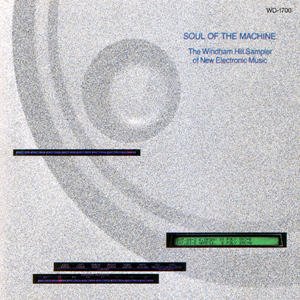
Chorale by Ted Greenwald & Scott Hiltzik Album: Soul of the Machine
Too many thoughts. Next song. This album comes from the Windham Hill label, which was once all acoustic guitars and hammered dulcimers, and may I add the nicest music to be curled up with on a cold winter’s solstice. But, like Dylan, they could not resist the allure of the electronic. Hence this album. This track piles chords onto soft chords. Thoughtful and almost halting, like a ballet.

Paradise Place by Siouxsie & the Banshees Album: Nocturne
I never really listened to Siouxsie & the Banshees besides ‘Cities in Dust’, but I could see why people liked ’em. Quite the goth image, and the songs were mostly solid. I don’t know why they didn’t click with me. This live track sees them in surprisingly muscular form. I can almost smell the audience.

Girl Afraid by The Smiths Album: Hatful of Hollow
More Smiths! This is a fine example of everything that was so great about them, too. Johnny Marr’s exceptionally busy fingers working over this snappy melody, with Morrissey piling on the sexual angst in typically humourous style. “Prudence never pays, and everything she wants costs money.”

Someday the jig will be up, and there’ll be an embarrassingly inappropriate collision between my wide range of classical music and the horrible Limp Bizkit track that I just know I’ve forgotten to uncheck. Will the musical depantsing come next week? Tune in and find out!

More proof that you are old

As people age, hearing gets worse, especially the top end of the hearing range. So there’s a new high-pitched ringtone that people with young ears can hear. Old farts can’t hear a dang thing.

So which are you? Old fart, or young fart? I’m pleased to report that I can still hear it, although I did have to crank the speakers pretty loud. But, as Dan Jurafsky points out, that’s not surprising — the ability to hear high tones is largely a function of volume.

The tone is ready for the downloading on the NPR site. Give it a try and post your (approximate) age and result in comments.

iTunes and DRM

I’ve been very good, and I’m more than halfway through marking my enormous pile of exams. I can mark forever as long as I have nothing else to do (which isn’t true) and as long as I have music listen to (which I do).

I was recently given an iTunes card, which I thought was great. I usually buy real CD’s because I like the shiny discs. But I thought it would be a good way to get individual songs from artists I was embarrassed to listen to. And that’s good, because iTunes has a lot of stuff I would be embarrassed to listen to. Also, it was a good chance to ‘go legal’ and buy songs I’d downloaded and enjoyed for years. The bitrate is a paltry 128, but it was a small price for peace of mind.

Only when I tried to play the iTunes files at work did I discover the wonderful world of Digital Rights Management, or DRM.

DRM exists because of the unique problem of digital media: if I buy something normal like a broom, and give it to you, I no longer have it. If I own a computer file, and I give it to you, I can still keep a copy. And so owners of digital media try to find ways to prevent this.

Most methods are ineffective and annoying to the customer. Exhibit A is the hateful Copy Control method which is encoded in discs from EMI. Even the logo is ugly. Looks like something radioactive. Copy Controlled discs don’t work in computers and some really good CD players because they purposely introduce errors into the disc. Your ordinary CD player has no problem because it just blasts right through the errors, but a computer demands a bit more precision, and gets hung up if you try to play or rip the files. (Or at least, used to get hung up — now CD rippers can compensate.) It gets even worse. Your disc will get scratched with time, and those scratches when combined with the in-built errors may just max out your CD player’s ability to cope, and you’ll get skipping even with minor disc wear. For this reason, Copy Control discs are not Compact Discs. You won’t see the distinctive ‘disc’ logo on any of your Copy Controlled discs — they’re not allowed to carry the logo because the discs aren’t Red Book compliant. Giving customers flawed discs and treating them like criminals is a crappy business model, especially when it doesn’t actually stop duplication.

Apple’s iTunes Music Store has a different approach: in order to play the sound files, you need to Authorise The Computer. Seems there’s something evil in an iTunes file: it remembers your iTunes username, and when you play the file, it checks to see if the computer is one of potentially five you have ‘authorised’. If you don’t want to use more than 5 computers, or you don’t want to listen to the files outside of iTunes (say in your car mp3 player), or you just aren’t particularly bothered by the intrusion, you’ll probably suffer no undue anxiety. Otherwise, you’ll have to navigate some tricky technical issues. Convert the file to mp3 and lose the lock? No dice — the file is an m4p file that resists attempts to encode it. Just burn it to disc? Fine, but you’ll lose quality.

Although I understand the record companies’ point of view, I detest DRM. The idea that someone can dictate how I get to use an item that I have paid for really mucks with my sense of ownership. I advocate three courses of action:

Thwart. If there’s one thing we’ve learned from the now-dead immigration debate in the USA, it’s this: Show me a 50-foot wall, and I’ll show you a 51-foot ladder. There are hacks to get around DRM, and you can google ‘hymn project’ or ‘m4p’ to find those.

Boycott. Don’t buy Copy Controlled discs, and buy music online from companies that don’t use DRM. Bleep.com is very nice, but I haven’t yet tried Magnatune, Mindawn, or Audio Lunchbox.

Bitch about it on your blog like it’s the biggest problem in the world today.

I am personally implementing all of the three.

Operation Purity Rescue

I’ve mentioned the ongoing expropriation of the word ‘purity’, and here’s the latest manifestation:

Apparently Christian kids who promise not to have sex get to wear ‘purity rings‘. (Oops, my mistake. It’s just the girls. It doesn’t seem to matter if guys have purity. Wonder how that works.)

Obviously, as a linguist I realise that semantic shift happens. And if the meaning of ‘purity’ narrows down to only a sexual meaning, then my job is to describe, not prescribe.

And yet — I’m not content to leave the word-manglers to it. This shift is motivated by the hatred of sex evidenced by so much of authoritarian Christianity. They want to talk about sex, but they don’t want to say the words!

Just imagine the father-daughter chat: “Princess, I’d like to talk to you about fucking. Please don’t bang anyone until you’re married. The Lord has promised blessings for those who only root their marriage partner.”

So they talk about it using any other terms they can (morality! virtue!) and as a result, a lot of fine words become useless for anything else. The words become — how to say — slutty.

It’s easy to decry this tendency at the hands of the word sluttifiers. But I have a way to take back the word ‘purity’. The first thing is to get the word out of the clutches of the Evangelical Right. And to do that, we have to redefine the word so they’ll drop it like a rock. So hear me out:

These virginity pledges have dismal success rates, right?

[R]esearch by Columbia and Yale Universities found while those who pledge chastity may delay first sex, 88 per cent of them eventually break the promise, and are then less likely than non-pledgers to use contraception.

So, Stage 1: everyone start using the word ‘purity’ as a euphemism for sex. As in:

– I was wondering if you might like to get together and promote ‘purity’ tonight.
– I’ve never had ‘purity’, but I’m curious.
– That girl is what we call ‘pure’.

People already think of sex when they hear ‘purity’, so it’ll be easy to nudge it over to prurience.

After the abstinence crew stop using the word in disgust, we can talk Stage 2: Rehabilitation.

Who’s with me?

Final observation from the article:

A MORI poll for The Observer found a fifth of British teenagers had had underage sex. The average age of losing virginity was 17. Almost a third of women questioned wished they had waited longer.

What they mean, of course, is that a whopping two-thirds of women polled thought they’d waited just about long enough.

Montessori v. Steiner: Smackdown!

I had an occasion to visit a Montessori school today; Oldest Boy is going to need to transfer out of the local Steiner School and go secondary soon. Where did the time go? Oh, yeah, I was doing a PhD.

The differences between Montessori and Steiner are like those between Mormons and Jehovah’s Witnesses — virtually indistinguishable to outsiders, but adherents to either system think they’re almost opposites. We liked Montessori, but we were put off by the focus on doing the tasks the right way. And in fact, whenever Oldest Boy’s Montessori friends would come over, they wouldn’t just play with toys, they’d sit down and very concertedly play with the toys until they had finished playing with the toys. Eventually we plumped for Steiner, but it was close.

To help you sort out the two, I present the facts about both systems, pulled from their own pamphlets.

Montessori Steiner
This system of education was founded by Maria Montessori, Rudolf Steiner,
an amazing genius of the early 20th century whose work was inspired by her work in science and medicine, and Catholicism esoteric Christian mysticism, and Catholicism
and whose other contributions include being nominated for the Nobel Peace Prize. starting homeopathic farming.
Our style of education is designed to help the development of the “whole child”, especially their intellect. creativity and spiritual development.
On a typical day, students may learn about syntax and math painting and knitting, world myths and legends
by choosing ‘jobs’ to do individually. working as a group and playing in lots of water.
They may also learn Italian learn German
and engage in abstract thinking playing the recorder
while learning about science. gnomes.
Reading is taught at the child’s own pace, preferably as soon as the eyes can focus held off till age 7 or later, when the child has acquired his or her etheric body
and computers are available in classrooms for students to do research. evil.
Our classrooms differ from those of other schools in that they are stacked from floor to ceiling with trays of cubes and marbles are whittled from a solid block of wood, and are swathed in literally miles of pink gauze, for that ‘womb-like’ effect
and visitors will notice that the walls of classrooms feature posters about science and nature. pictures of Mary.
We are in a constant state of renovation because state funding for alternative schools in Australia is pathetic. state funding for alternative schools in Australia is pathetic.

Friday Random Five: 80s, but the good 80s.

A lot of my collection comes from the 80s when I started collecting CDs, and they’re starting to show up in the playlists. My fault, really, for feeding every last one of them to the computer to be mp3ed. Now I’m stuck with them. Our possessions are our joy and our curse. One reason why I’m not going through Vinyl Conversion Hell. Some things are better left in the box.

Here are the five for today:

A Rush and a Push and the Land is Ours by The Smiths Album: Strangeways, Here We Come
Was there ever a finer band than the Smiths? Reams have been written about the dour/jangly songwriting team of Morrissey and Marr, but sometimes you just have to go on a Smiths phase and hear the songs again to remember how well-constructed and engaging they are (except for ‘Barbarism Begins at Home’). This song opens their last album, where things were just starting to get interesting. Guitars were making way for other instruments, different styles of songs were cooking, and then Johnny Marr ended it by leaving the band and never doing anything worthwhile again ever. “Oh, but don’t mention lerv. I’d hate the pain and the strain again.”

Primitive Heart by Cocteau Twins Album: Tishbite (Single 2)
There were two singles for Tishbite, each with their own b-sides. This track comes from the rarer one. A lovely single from the band before their breakup. Not as dreamy perhaps, but still easy on the ears. Also, it’s fun to say ’tishbite’. What is a tishbite? Elijah was one, I know that much.

The Ritual Echo by Bill Nelson Album: Sounding the Ritual Echo (Atmospheres for Dreaming)
Continuing on the floaty thing. Bill Nelson, rock guitar virtuoso from Be Bop Deluxe, reworked his sound in the early eighties, producing song after song of soft and intricate soundscapes on antiquated analogue equipment. These songs worked into a five-album set known as ‘Trial by Intimacy’. I remember spending many afternoons in the undergrad days looking from my 6th floor dorm window, gazing out onto the foggy valley below. This was the soundtrack.

Fooled by a Smile by Swing Out Sister Album: It’s Better to Travel
This whole album from Swing Out Sister was a perfect slice of Art Deco Paris-in-the-thirties tongue-in-cheek jazz-pop that could really evoke the hyphens like few before or since. The production was smooth, the horns and strings sassy and precise, the instrumentations full of angles and chords. Great vocals too. A very assured debut.

We Care a Lot (Original Version) by Faith No More Album: Who Cares a Lot? – Greatest Hits
Just as Nirvana wasn’t Nirvana until Dave Grohl joined, Faith No More wasn’t really Faith No More until Mike Patton. But this is still a fine song from the early days that answers the musical question “To what extent does Faith No More care?” I seem to remember an early review in Spin that didn’t really review the album, though it did take the piss out of Kim Carnes, for some reason.

Will we hear some newer stuff next time, or is Daniel’s iTunes Library so clogged with 80s stuff that it resembles KROQ’s playlist? Tune in next time and find out.

Basque inscriptions discovered

This is interesting: Basque may be even older than heretofore supposed.

Basque, as you’ve heard, is that language between Spain and France that is completely unrelated to any European language. It’s got an ergative-absolutive case system (in common with some Australian languages) and very unusual inflection and subject-verb agreement. It’s also been the subject of some bizarre pseudo-linguistic speculation, including that it’s related to Ainu in Japan, and that it’s the language Adam spoke.

Anyway, there’s been a discovery that pushes Basque back about eight centuries.

Archaeologists have unearthed inscriptions in the Basque language that could date from as early as the third century, a find Basque linguists hailed as extraordinarily important.

Basque, or euskera to its speakers, is considered to be one of the oldest languages in Europe and scholars have long wondered whether it is derived from African, Caucasian or Etruscan tongues, or if it developed in isolation.

More:

If the ages of these writings were confirmed, that would cause a revolution in the theories of the origins of the Basque language, and will move its birthplace to Alava.

Furthermore, some of the legible writings in Basque refer to Christian themes, which would strengthen the hypothesis that there existed Christian communities in the Basque Country earlier than historians thought.

That’s if they’re for real. I find it very strange that 3rd century Christianity would match modern Christianity to such an extent. Check out the Calvary scene. Doesn’t that look kind of… modern? What’s with the RIP? But I’m not an archaeologist.

« Older posts Newer posts »

© 2026 Good Reason

Theme by Anders NorenUp ↑