Good Reason

It's okay to be wrong. It's not okay to stay wrong.

Category: post (page 77 of 125)

A moment of quiet appreciation

Let’s all take a second and appreciate how nice it’s been on the Net now that Ron Paul has dropped out of the presidential race. It’s been weeks since I’ve had to scroll through pages of cut-and-pasted laudatory screeds about how RP was going to save us from ourselves and the coming monetary/constitutional collapse/invasion of the zombies from Neptune, if only we’d listen to the Truth. I don’t know or care where the PaulBotTards have all gone, but hasn’t it been nice?

I mention this because right now is the Golden Age of the Net. We’re post-Ron Paul, but pre-election. See, once a Democrat is elected president, all those militias that we haven’t heard a peep out of during the Bush years will come roaring back and every comment thread will be black helicopters and jackboots. It’ll be so ’90s, you’ll think you were listening to EMF and wearing Girbaud jeans.

Man, that is going to suck.

McCain = Bush

They say if you want a dog to stop killing chickens, hang the dead chicken around the dog’s neck until it can’t stand the smell anymore.

So I’m pleased about this ad by Progressive Media USA. We should never stop tying Mr McCain to Mr Popular.

Repeat this message until even Republicans can’t stand the stench.

Sometimes crotch-grabbing is okay, and sometimes it just isn’t.

You can see how a belief in the Evil Eye might have gotten started: you hate someone, you give them filthy glares, and if a rock falls on them — voila! a superstition is born!

How to protect oneself? Another superstition!

The Italian supreme court has outlawed men from touching their genitals in public.

Crotch-grabbing is an ancient superstitious habit in Italy that is believed to ward off the evil eye.

It’s traditional for men to do it if passed by a hearse or when discussing serious illness or disasters.

However, the supreme court ruled that a 42-year-old man from Como had broken the law by “ostentatiously touching his genitals through his clothing”.

Italy, eh? I was going to say that there must be a correlation between religiousness and superstition, but Jesus and Mo already beat me to it.

Deconversion stories: The last Sunday School lesson

I was a Sunday School teacher when I hit what turned out to be the initial months of my deconversion. I’d promised myself years earlier that I wouldn’t testify that anything was true unless I believed it to be true. As belief ground down, that eventually meant that I couldn’t say very much at all. So I began to notice that I hadn’t been teaching church doctrine as ‘true’, but rather as merely ‘helpful’ (although that claim could have used some scrutiny). My Sunday School lessons tended to focus not on the truthfulness of the gospel, but on self-improvement, learning to be happy in life, and other humanist values. Pretty watered-down stuff, but it was best I could do if I wanted to hang on to religion and reason.

I remember the last lesson I ever gave in Sunday School. I hated it. I realised that I was talking around the subject material, probably because I was coming to the uncomfortable realisation that I didn’t believe it. I guess I was having a conflict between what I had always thought and believed was true, and a whole body of opposite information that seemed to be demonstrably true. How I hated that conflict.

Toward the end of that lesson, I said “I’m grateful for the scriptures. They’ve taught me a regard for truth, and while insisting on truth isn’t always comfortable, I’ve found that it can be a help when…”

The class waited.

“…when your belief system changes very rapidly, as mine has.”

It was the closest I ever came to making a public confession of doubt in church.

Of course, I closed the lesson “in the name of Jesus Christ” as was customary, but it felt like my mouth was full of sand. How could anyone presume to do anything in his name? What were we all doing here?

Compared to some, I got off easy. It’s difficult to go through a deconversion, but how hard must it be when your religion is also your job? Jeffrey has forwarded me this article about priests and pastors who deconvert.

McAllister has learned that you can tell inspirational stories, grounded in social justice and tolerance and peace, without having to bring God into the picture—and this sermon was a masterful case in point. A woman in his congregation had recently dropped everything to care for her cancer-stricken daughter, and that selfless commitment was sacred in its way. “You can see how I cook the books a little bit to make it easier to look in the mirror,” he says of his sermons. “But there are times when I get that sort of empty feeling in my stomach, like I’m a fraud.”

I hear that.

McAllister is not just scared for himself. “I know that my parishioners look to me for comfort,” he says. “They’re coming to the end of their life and they want some assurance that it’s all going to be OK. I have sat at the deathbed of people in my congregation and told them what I regard as lies—or fantasies, at least—just to give them comfort. I’m willing to do that up to a point, but not for the rest of my working life.”

Then there’s the practical dimension. McAllister owes the church $18,000 for his schooling, at the same time as he’s trying to put his last son through college. “I’m 56, which isn’t a real good age to be pounding the pavement, and I’ve got a master’s of divinity, not the most marketable degree in the world.”

Ouch. I guess the Mormon tradition of having a lay ministry saved me some pain.

But have a look at an idea being floated by the RDF:

Richard Dawkins is convinced that McAllister’s situation is common; in fact, he hopes one day to address it through “clergyman-retraining scholarships,” set up through his charitable foundation, to “bridge the gap between living a lie and getting a new life,” as he puts it.

Damn, that is forward thinking. I’m going to have to give a serious look at adding the Richard Dawkins Foundation to my charity list.

This is an amazing article. I felt like every one of the stories from the ex-clergy contained something from my own experience. See if you don’t agree.

Have you been high today?

Good old human brains. Always picking patterns out of noise. And if you have someone to prime you in a certain direction, then it’s easy to see what you expect to see.

Case in point: this fantastic (and hilarious) music video in Hindi. Once you’ve had the (mildly risqué) English suggested to you, it’s very difficult not to hear it.

After you’ve dried the tears of mirth from your eyes and forgotten the lyrics, try watching the original without the subtitles and notice how the English disappears.

Why is disbelief threatening?

I shouldn’t be amazed at the overheated rhetoric going on, but I sometimes am.

Data point 1: An outrageous outburst from Illinois state legislator Monique Davis. Apparently the governor had been shoveling money to a Baptist church, and when atheist and legal gadfly Rob Sherman took up the matter, her response was (click through for audio):

Davis: What you have to spew and spread is extremely dangerous, it’s dangerous–

Sherman: What’s dangerous, ma’am?

Davis: It’s dangerous to the progression of this state. And it’s dangerous for our children to even know that your philosophy exists! Now you will go to court to fight kids to have the opportunity to be quiet for a minute. But damn if you’ll go to [court] to fight for them to keep guns out of their hands. I am fed up! Get out of that seat!

Sherman: Thank you for sharing your perspective with me, and I’m sure that if this matter does go to court—

Davis: You have no right to be here! We believe in something. You believe in destroying! You believe in destroying what this state was built upon.

Summary: Atheists have no right to be here, and are dangerous and destructive. Even the knowledge that atheism exists is harmful to children.

Data point 2: Dawkins’ website shows a new book, a bit of pushback to the New Atheism: The Delusion of Disbelief: Why the New Atheism is a Threat to Your Life, Liberty, and Pursuit of Happiness

Unpack that title: People who don’t believe in god not only threaten your life and your liberty, but also, somehow, America.

I could go on.

Why are atheists so threatening?

I like the House of Cards theory: Religious faith has no factual basis. Believers secretly suspect this, and aren’t pleased when people point it out. Remember that Monty Python sketch about El Mystico, who would put up blocks of flats by hypnosis? It’s like that; belief holds the edifice up; disbelief makes it collapse.

Another answer has to do with magical thinking: I used to hear people in church express the view that the righteous are somehow protecting the wicked just by being scattered within the population. It’s like the story of Abraham in Sodom: if only he’d been able to find a few good people, the city would have been magically saved. Conversely, atheists within a population can magically undermine it by emanating powerful waves of anti-God energy, capable of destroying countries and institutions.

But I think the most accurate view is the Meme War. Maybe believers are actually right. Atheists are dangerous — to belief systems, not to people. Admittedly, this is a distinction that True Believers have trouble making. When you’re so heavily invested in your belief system that you mistake it for your whole life, then it’s easy to think that a threat to the belief system equals a threat to your life.

What this tells me (yet again) is that religion, if taken seriously, has an unhealthy ability to engulf your entire life. It can encompass your family, your community, and your entire way of living, to the detriment of your ability to see clearly. Certainly true for ‘high-commitment’ religions.

Last year, at the start of the ‘New Atheist’ insurgence, I wondered, “When are we going to see some pushback?” Well, here it is. Unfortunately, instead of bringing good arguments, the believers are making even less sense than usual. Which makes me wonder: is it superstitious for atheists to claim that religious people are threatening?
Deconversion stories: Doomsday

Lisa: All through history, self-anointed seers have predicted the end of the world and they’ve always been wrong.

Homer: But sweetheart, I have something they didn’t have. A good feeling about this!

– Simpsons: ‘Thank God It’s Doomsday’

It’s April 6th, the day that Mormon leaders pegged as Jesus’ birthday, way back in AD 1. (How that works with different calendrical systems, I have no idea.) Three BYU professors have pointed out problems with this view, but they were just using the science of men, while not one but two prophets of God have confirmed the April 6th birthday. Take that, uninspired smarty-pants scientists!

And this year, April 6th is even a Sunday. Now I seem to remember that back in the 80s, some Latter-day Saints were handing around Xerox copies (just like they email each other now) that Jesus was going to come again when April 6th fell on a Sunday. They were pushing hard for 1986. I have a very clear memory of being in my girlfriend’s bedroom that morning, suddenly remembering that it was April 6th, and thinking, “If Jesus comes today, I’m toast.” And then 6/4/86 came and went, as it had in 1844, 1914, 1975, and every other year.

I suppose Doomsday is on my mind because of this very sad story:

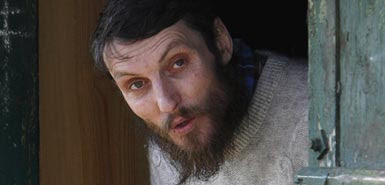
Cult leader Pyotr Kuznetsov tries suicide after realising he was wrong about doomsday

Would you follow this man into a cave? Some people did. They stayed there for about a month because he’d told them the world was about to end. They’ve been trickling out ever since.

But since the failed prophecy, he tried to kill himself by beating his head against a log. He’s apparently schizophrenic, poor guy, but the religion probably masked the schizophrenia. If a schizophrenic guy says that John F. Kennedy is with him all the time, or that Ghengis Khan is his best friend and constant companion, you get him some psychiatric help. But if he says that Jesus Christ is always with him, he’s just a normal religious guy. It may delay an accurate diagnosis, perhaps until it’s too late. Think this guy’s followers would have spent so much time in a cave if he’d said that James Dean was going to come again soon?

There’s a book called ‘When Prophecy Fails’ by Leon Festinger that figures into the later stages of my deconversion. Back in the fifties, there was this lady who thought she was getting messages from space aliens. (Weren’t we all.) The aliens said that the USA would be destroyed by a massive flood, but that spaceships would rescue those who believed. Festinger et al. infiltrated the group, posing as believers and investigators, to see what would happen when the prophecy failed. Fun, huh? Back in the good old days before ethics committees.

[SPOILER ALERT!]

They found the following:

  1. The leaders regrouped and moved the date ahead, figuring this time it would work.
  2. Strangely, they began to proselyte vigourously, which they’d never done before. One might see an analogy in Christianity.
  3. The people who stayed with the other group members on the weekend after the ‘disconfirmation’ tended to continue with the group. If someone happened to go away that weekend, they didn’t come back.

The book really did a number on my head, I must say. I began to see things about my own faith. I realised that people could have deep belief in absolutely loony and false things, and argue passionately for them. Which I knew, but now I saw myself in that mirror. I also saw that groups use a variety of techniques to keep people believing, like communal reinforcement. And I saw some interesting things about how members may try to usurp power over the group (as happened there), and I reflected on how the LDS church has managed that problem admirably well.

Once I realised that, yes, even I could be wrong about my spiritual ‘impressions’, then it became important for me to be a critical thinker, and to make sure my beliefs were grounded in evidence. And that was the beginning of the end for my religious life. No more doomsday mystics. No more mysticism at all, thank you.

Friday Random Five won’t sacrifice anything at all to love.

I’ve had enough of sorting through identical sounding ambient glitch bands. Fortunately, I’ve found something really great to rescue me from Click Madness.

If you’ve been around for awhile, you may remember a project by Harold Budd and the Cocteau Twins called “The Moon and the Melodies”. Some great songs there, except that some songs sounded like the Twins and some like Budd, and it never really gelled into the Cocteau Budds. Good stuff anyway.

Now in our post-Cocteau world, Robin Guthrie (of the Twins) and Harold Budd have teamed up again with two albums (released on the same day) called “After the Night Falls” and “Before the Day Breaks”. The two albums are of a piece; even the song titles flow on from each other. Within are exquisitely woven sounds; Budd’s sepia-tinged piano and Guthrie’s flowing guitar, fusing into something airy and watery, light and shade and beautiful. But for the missing vocals of Elisabeth Fraser, it’d be like the Cocteaus never left.

And now this week’s offering of five random songs from the collection.

Suede by Ken Nordine
Album: Wink
You’ve heard Ken’s voice, even if you don’t know the name. He’s done voiceover work for films and commercials for decades now. But he’s also a very hip sort of beat poet guy in his warm cool way. I love his “Now, Nordine” shows, and “Word Jazz“.

This album finds him contemplating (in his schizophrenic way, Ken talking to Ken) windscreen wipers in love, the morality of licking lampshades, and here, the dangers of sneezing on suede.

It might be worth mentioning that the album was originally called “Twink”, before they changed it for obvious reasons. Ken doing Robert Shure’s “Twink” just sounds wrong. Semantic shift and all that.

All the Way to Reno (You’re Gonna Be a Star) by R.E.M.
Album: Reveal
Even though everyone knows R.E.M., and I like a lot of their albums, I still find something hidden in R.E.M. that I can’t get to. Maybe I didn’t listen to them early enough; they weren’t one of ‘my bands’. (U2 was never one of my bands either, but now I no longer care.) Maybe the incomprehensible mystique that they cultivated in the 80s still clings to them for me. And after Berry’s departure, trying to ‘get’ R.E.M. became impossible because the band I never really knew was gone.

That said, I still like Time magazine’s description of this album: a ride through the rain forest in a hovercraft. This song feels like driving somewhere out West, or maybe the beginning of Mulholland Drive.

Stories of Old by Depeche Mode
Album: Some Great Reward
Depeche was hitting their stride here, carving a template that they’d use for their next 20 albums: sexual dissolution encoded in religious metaphor, all wrapped up in the sharpest sound samples anyone had ever heard. When I first heard this song in the autumn of 1984 (driving down to Utah), I decided that Depeche Mode were the kings of neat noise.

Hong by Kiln
Album: Sunbox
Kiln is the best of the ambient glitch bands for my money. The mix of smooth chill and clicky percussion is perfect. It won’t bore you or put you to sleep, unless you’re happy to go there. Simple, but intelligent.

War Pigs by Faith No More
Album: The Real Thing
I never had a Sabbath phase because as a young Mormon boy I was askeert, but I do really enjoy this cover. If there had been any doubt about FNM’s metal credentials, let them be dispelled. And the lyrics: relevant for Iraq just as for Viet Nam.

Hip hooray! Fafblog is back.

And just when we need them! All the gang are here, including Fafnir, Giblets, the Medium Lobster, and occasionally Evil Santa and Zombie Lincoln.

Here.

Fitna

The film ‘Fitna’ is a really nasty and biased piece of inflammatory, manipulative garbage made by a right-wing anti-immigration asshole.

I’ve decided to link to it here for three reasons.

1. LiveLeak took it down temporarily because of death threats. Fuck that. Fuck anyone using threats and intimidation to control what we see and hear.

2. The people featured in the film really did say the things they said, and it’s reasonable to expose them to the light.

3. I’m aware that there are nice moderate Muslims, just like there are nice moderate Christians and nice moderate Jews. I’m also aware that there are scriptures in the Quran (Bible, etc.) that urge peace and shun violence. But you know what? It doesn’t matter. How peaceful a religion is depends on who’s running it at the time. Even if a religion is currently completely nice, there will always be some ‘bad scriptures’ lurking in there, waiting for some weirdo to interpret in their own violent way. It’s only a matter of time. Tick tick tick.

And when enough people believe their interpretation, they’ll take planes into buildings, and kill people for not believing. They’ll even murder their own children because of the extremist view. And there’s no way to reason them out of it — the delusion is fixed.

This is why moderate religionists are just as responsible for extremism as the extremists. The problem is god-belief. If people believe that a supernatural being exists, and wants them to do certain things, then their belief can be co-opted by anyone convincing. If not now, then when the climate changes. The line is not between the moderate and the extremist. It’s between the rationalist and the supernaturalist.

Older posts Newer posts

© 2026 Good Reason

Theme by Anders NorenUp ↑