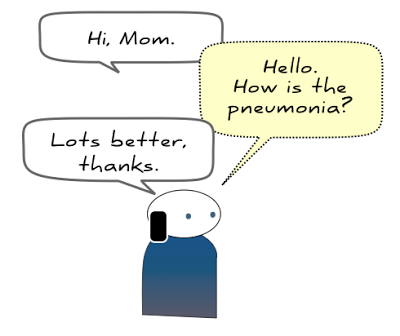


Lucky for me I was living in a country where medicine is easily available. If I were living somewhere else, I could have died. Donate to Médecins Sans Frontières so sick people can have access to medicine they need.
Lucky for me I was living in a country where medicine is easily available. If I were living somewhere else, I could have died. Donate to Médecins Sans Frontières so sick people can have access to medicine they need.
This month saw the state round of OzCLO, or the Australian Computational and Linguistic Olympiad. High school students from all over Perth poured into UWA to solve tough puzzles and problems. It was great to see kids getting fired up about linguistics, I must say.
The peak moment for me was seeing one student stare for ten long seconds at the problem on syntax (which I wrote), and then silently mouth, “WHAT?!?”
Here’s a taste of the kinds of problems they had to face.
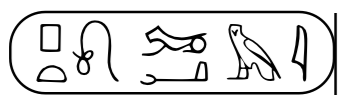
One of these two Egyptian hieroglyphic cartouches represents the name of Cleopatra. Which one is it, and whose name is in the other cartouche?


(No spoilers in comments, please.)
There are more sample problems here, if you get hooked.
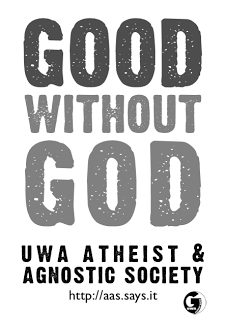
The first batch of posters for the UWA Atheist and Agnostic Society have hit campus.

We might not have gotten them done so quickly, but since the odious Christian Union blanketed the uni with their odd (and strangely defacement-prone) “Jesus Much?” posters, we had no choice but to remind students of the godless way.
It really is amazing that churches give so much money to CU. I think they see the university as some kind of huge recruitment pool for future tithers. But in the process, they’re wrecking people’s critical thinking skills and promoting mythology. Just the opposite of what should happen at university.
Anyway, future versions of the poster will have the main text somewhat smaller, and catchy slogans in the middle. Say, anyone have any suggestions?
During one of those browser free-association moments, I found myself staring at the Mormon.org website. That’s the focus for their proselyting efforts on the Web.
Here’s something that really curdled my cream.

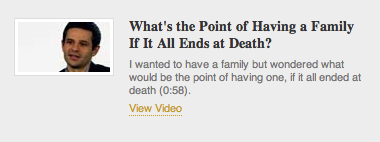
What’s the Point of Having a Family If It All Ends at Death?
I wanted to have a family but wondered what would be the point of having one, if it all ended at death.
I wanted a sandwich, but wondered, “What’s the point of having a sandwich if it’s just going to end when I’ve eaten the sandwich?”
This is something I’ve heard from a number of believers: if life doesn’t go on forever, then life is just some cosmic joke with no purpose.
I harbour no illusions that my family relations will last forever, since no one’s ever provided evidence of a world beyond. Nevertheless, I see a great deal of point in having a family. I get to have good people in my life. I get to raise a couple of good men for the next generation of humankind. We have good talks. My beloved and I get to live together happily, right now. That’s worth something, even if it doesn’t last forever.
Life is cool. There’s so much to enjoy: get-togethers with people we love, good food, books, music. And sadness and frustration. A whole universe of wonder and discovery. And for this creep to sit there and say ‘What’s the point?’ is a kind of petulance bordering on ingratitude.
A vegetarian diet may help to protect against cancer, a UK study suggests.
Analysis of data from 52,700 men and women shows that those who did not eat meat had significantly fewer cancers overall than those who did.
But surprisingly, the researchers also found a higher rate of colorectal cancer – a disease linked with eating red meat – among the vegetarians.
Oh, that. That’s because we’re eating teh Fake Meat, hom nom nom nom.
Finally had time to get a good look at the ARIS survey everyone’s talking about. The big news: most religions are down, non-theists up.
The percentage of Americans claiming no religion, which jumped from 8.2 in 1990 to 14.2 in 2001, has now increased to 15 percent. Given the estimated growth of the American adult population since the last census from 207 million to 228 million, that reflects an additional 4.7 million “Nones.”
If all those ‘nones’ were a religious group, they’d be the third most populous, behind Catholics and Baptists.
And if you want some striking graphics to illustrate, USA Today has them.
HBO’s Depiction Of Mormon Ceremony Upsets Church
The Church of Jesus Christ of Latter-day Saints Is ‘Appalled’ at the TV Series
The Church of Jesus Christ of Latter-day Saints is angry over an episode of HBO’s hit series “Big Love” that the church says is in “appallingly bad taste.”
An upcoming episode of “Big Love,” which chronicles the lives of a fictional polygamist family, is reported to be depicting an endowment ceremony, one of the most sacred rituals of the Mormon Church.
HBO has apologised.
“Obviously, it was not our intention to do anything disrespectful to the church, but to those who may be offended, we offer our sincere apology,” read the statement.
It’s one of those apologies like “Sorry you got mad” or “Sorry you’re so touchy.” Except in this case, it’s “Sorry, but we’re running the episode anyway.”
Does it seem strange that the LDS Church is objecting to people knowing the details of ceremonies which, according to them, contain the truly great things that all people need to know for salvation? Okay, that’s not really fair. They just want people to see the temple ceremony with the appropriate “context”, by which they mean the kind of context where you join the church and pay them lots of money over years and years. That kind of context.
Here’s the issue: the LDS Church has (don’t take this wrong) occult practices. I don’t mean ‘occult’ as in ‘satanic’ like people sometimes do. I mean ‘occult’ in an earlier sense: ‘occult’ meaning ‘hidden’. Many 19th century movements, religious and otherwise, taught that the really great truths were held in reserve for those who were initiated into the mysteries. The Masons and the Rosicrucians, the Gnostics and the Theosophists, all used this strategy. Joseph Smith plumped for it too in later years, for better or worse. But of course, secret knowledge has a way of getting leaked in the 21st century. How reasonable is it to expect the mysteries to stay hidden in the Information Age?
I understand the Mormons wanting to control their Endowment ceremony. After all, they wrote it. But it’s not reasonable to expect everyone else to share their concern.
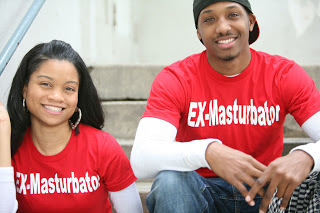
 Even though religiously-motivated sexual repression is a very sad thing to watch, it does have its hilarious side. Witness the ex-Masturbator t-shirt. Imagine trying to have a conversation with someone wearing that. Pleased to meet you. I won’t shake hands, thanks.
Atheist t-shirts have a certain transgressive appeal, if you don’t mind offending people just by walking down the street (which I don’t). But you can’t pull off edgy and squeaky-clean at the same time, and people look like idiots by trying to do so. At least they’re not as bad as the unintentionally homo-erotic Mormon t-shirts.
Speaking of sexual repression: according to a recent study, guess which state has the most porn subscribers per capita?
Those states that do consume the most porn tend to be more conservative and religious than states with lower levels of consumption, the study finds.
…
The biggest consumer, Utah, averaged 5.47 adult content subscriptions per 1000 home broadband users; Montana bought the least with 1.92 per 1000. “The differences here are not so stark,” Edelman says.Number 10 on the list was West Virginia at 2.94 subscriptions per 1000, while number 41, Michigan, averaged 2.32.
Eight of the top 10 pornography consuming states gave their electoral votes to John McCain in last year’s presidential election – Florida and Hawaii were the exceptions. While six out of the lowest 10 favoured Barack Obama.
There are a few holes in the study. I suppose it’s possible that it’s just the non-Mormons in Utah ordering up all the porn. But you combine this result with the ‘men kissing‘ item from Google Trends, and the picture begins to emerge.
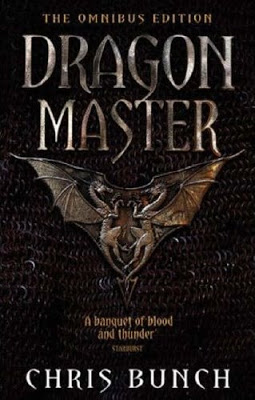
 Usually it’s the Daniel font that gets all the attention, but another of my fonts has been popping up lately — Yataghan. It’s gothic and snaky.
Yesterday at the bookstore, I noticed that they decided to use it for the Omnibus edition of Chris Bunch’s book, Dragonmaster. I must say, it looks quite imposing in all caps like that. And the review quote — ‘a banquet of blood and thunder’ — looks suitably dagger-like in the lower case.
You’re welcome to download Yataghan and use it for anything you want. Just try not to harm anyone, okay?
We’re a day late on the Oscars thing in Australia, so I’m only just getting to the videos.
I was moved by the acceptance speech of Lance Black, who won Best Screenplay for Milk. He grew up in the Mormon church.
Here’s a transcript of the relevant bit, for those of you who can’t do video.
“I heard the story of Harvey Milk and it gave me hope. It gave me the hope to live my life openly as who I am, and that one day I could even fall in love and get married.
“I want to thank my mom, who has always loved me for who I am even when there was pressure not to.
“But most of all, if Harvey had not been taken from us 30 years ago, I think he would want me to say to all of the gay and lesbian kids out there tonight who have been told that they are less than by their churches or by the government or by their families, that you are beautiful, wonderful creatures of value, and that no matter what anyone tells you God does love you and that very soon I promise you, you will have equal rights federally across this great nation of ours.
Thank you and thank you God for giving us Harvey Milk.”
I grew up as a straight kid in the Mormon church, and they gave us heaps of guilt just over playing with ourselves. I simply can’t imagine what he must have gone through as a gay teenager.
Black’s comments are laudable. If they make some gay person feel like they’re all right despite the attempts of religious bigots to convince them otherwise, then well done. Suicide averted. But there’s a bigger problem here: Black is trying to mitigate the effects of religions without challenging their authority. By taking god as a given, Black unwittingly gives tacit legitimacy to religions as potential sources of moral guidance. In fact, they have no more moral authority than anyone else, and most likely less because of their immoral actions.
It comes down to the whole God thing. Black somehow knows that this mysterious being ‘god’ loves gay people. How does he know that? Is it possible that god really disapproves of them, or perhaps even hates them? How does he know that God ‘gave’ us Harvey Milk? If Satan exists, why didn’t he give us Harvey Milk as a way of deceiving us and making us into homos? Does Black have some magical conduit to heavenly knowledge? If it’s possible to get revelations from a god, how do we know Black has the right idea, and not those nice men in suits that we see in General Conference?
I was re-reading this article again, an interview with Carol Lynn Pearson. She’s a Mormon poet, playwright, and actor. With her one-woman show, Mother Wove the Morning, she’s worked to bring Mother-in-Heaven out of the periphery of LDS doctrine. She’s also an advocate for gay Mormons.
It’s the question Carol Lynn Pearson hears just about every time she appears in public. She heard it again last weekend, during an audience discussion that followed a packed-house performance of her play “Facing East” at Theatre Rhinoceros.
How, one woman asked, could Pearson justify her own membership and involvement in the Mormon church?
…
Pearson, a slim, forthright woman of 67 who wears her silvery white hair jauntily short, nodded along as the question was posed. “I love the Mormon community,” she responded, “and I have a unique opportunity to build bridges.” A number of her church ward leaders, Pearson noted, had attended the opening of “Facing East” the night before. “They’ve been nothing but supportive,” she said. “I believe the Mormon heart is a good heart. I feel comfortable with my role in the Mormon church.“
That was before the LDS Church’s involvement in Proposition 8. I wonder if she still feels ‘comfortable’ being linked with a church that claims divine support for inequality and prejudice. Yes, she seems to do some good, but does she need to do this from inside the organisation? Is she not, in fact, attempting to help those who suffer, while providing a way for them to remain connected to the church that is dishing out the suffering?
There are two approaches you can take in this kind of conflict: reject religion, or attempt to transform religion into something less authoritarian.
The transformative approach is tempting, especially for religious liberals. You get to stay in The Bubble, where it’s comfortable (even though you take some knocks from the orthodox believers), and you get to imagine that someday… some beautiful day… your religion will change from conservative authoritarian to liberal democratic — perhaps even gay-friendly! And you can play a part in this magical process just by making occasional comments in Priesthood Meeting. And then the Millennium comes, and Jesus tells you that you were right all along, and everybody gets a pony.
Needless to say, I think the other approach — to reject religion — is the right one. We need to recognise that there probably isn’t a god, that religious organisations have no special authority to dictate the terms of morality, and that actions like Prop. 8 are signs of their all-too-human origins. This view has the benefit of being true.
I have this disturbing thought that keeps popping up: What if things had gone differently for me, my deconversion somehow hadn’t happened, and I was a believing Mormon in the middle of this Proposition 8 mess? Would it have been a deal-breaker for me? Would I have had the fortitude to recognise the signs of man-made prejudice? Would I have realised that it was time to get out? Or would I have kept making excuses for the Church, like some abused spouse? Would I have imagined things would change… eventually? (We let Blacks have the priesthood, after all! Well, black men.) Would I have fallen back on my old rationalisations: that the Lord is in control, but he allows his servants to make mistakes? Would I have privately disagreed with the Brethren, and fancied myself courageous for doing so?
I worry that, even confronted by an ugliness of this magnitude, I would have remained a liberal Mormon. Dependence on others for your opinion conditions you to be a coward, and I was very well-conditioned. And so I probably would have continued to give my time and my money to an organisation that was actively working against my values, and cared nothing for (in fact, actually disdained) the views of people like myself.
Now, outside the Church, I am free to speak out against injustice and duplicity without having to step carefully around ‘criticising the Brethren’. I get to live a moral, fulfilling life, without the moral conflict of trying to hold two opposing sets of opinions simultaneously.
The LDS Church will carry out actions like Prop. 8 whenever they wish, whether you are a member or not. But if they count you as a member, they do these things with your support. Something to think about.
© 2026 Good Reason
Theme by Anders Noren — Up ↑
Recent Comments